
Updated 7/9/26
Dixie Fire Claim Litigation
Representing Survivors of California's Largest Single Wildfire
The Dixie Fire was the largest single wildfire in California history. It burned more than 960,000 acres across five Northern California counties and destroyed the town of Greenville. The catastrophic blaze was caused by a Pacific Gas & Electric (PG&E) distribution line contacting a tree that PG&E should have cleared but failed to maintain.
Danko Meredith represented survivors of the Dixie Fire and successfully recovered more than $50 million for our clients.
Utility Admissions: PG&E has publicly stated that it is “probable” it will have to pay for the damages resulting from this disaster. When a utility fails to comply with its legal tree-trimming obligations and its electrical lines ignite a fire, the utility is legally responsible to pay for the resulting damage.
If you have been affected by the Dixie Fire, contact Danko Meredith to discuss what your claim against PG&E might look like and how you can be made whole for your loss. There is no cost and no obligation.
Summary of the Dixie Fire Case
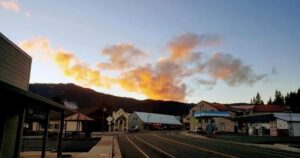
Overview of Litigation & Structural Liability
| Case | Impact & Scope | Ignition Cause & Details | Litigation Status |
| Dixie Fire | Burned 960,000+ acres across 5 counties; completely destroyed the town of Greenville. | A Douglas fir tree at Bucks Creek leaned against a 12kV powerline because PG&E failed to clear it. | Recovered more than $50 million for our individual clients. |
Specific Breakdown of Utility Negligence
- Failure to Clear Vegetation: PG&E is legally required to keep trees trimmed at least four feet away from its electrical lines.
- The Bucks Creek Ignition: The utility company left a Douglas fir tree growing too close to its 12kV powerline at Bucks Creek. As a direct result of this failure, the tree leaned up against PG&E’s wires and started the Dixie Fire.
Post-Fire Property Damage: Winter Vulnerabilities
Unfortunately, after a catastrophic wildfire like the Dixie Fire, conditions on affected properties typically get worse rather than better as winter rolls in:
- Errant Utility Crews: Trees that managed to survive the initial fire often end up getting cut down by errant PG&E crews.
- Falling Hazards: Dead trees and weakened tree limbs begin to fall over time, rendering properties “off-limits” due to the safety hazards.
- Erosion & Landslides: Water runoff causes severe erosion issues, soil subsidence, and dangerous landslides.
- Structural Instability: Fences and remaining structures frequently lose their stable footing.
- Road Destruction: Gravel roads are routinely damaged by heavy equipment entering private properties to remove trees.
- Ecological Damage: Invasive weeds rapidly take hold and propagate across the terrain.
- Waterway Contamination: Heavy silt fills streams, which kills fish and, in some cases, livestock.
- Pest Infiltration: Displaced pests, rodents, and destructive insects quickly infiltrate the damaged properties.
Frequently Asked Questions
- Q: PG&E went bankrupt. Does it have money to pay Dixie Fire survivors?
A: Yes. PG&E is now out of bankruptcy, is in good financial condition, and is making a profit. PG&E reports that it has $300 million in private insurance coverage specifically for the Dixie Fire. If that fund is not enough, PG&E has access to a $21 billion state-sponsored insurance fund, confirming their clear ability to pay claims. - Q: The Dixie Fire is huge. Won’t PG&E just file bankruptcy again?
A: That is highly unlikely. The whole purpose of the state-sponsored $21 billion insurance fund is to keep PG&E financially sound despite facing massive claims from fires like the Dixie Fire. - Q: How long will it take for Dixie Claimants to get any money?
A: In most of the cases we handled against PG&E before its bankruptcy, we successfully put settlement checks in our clients’ hands within 3 years from the date of the fire. - Q: Is this a class action?
A: No. In a class action, you are automatically involved unless you actively opt out. A wildfire lawsuit is a “mass tort,” meaning each person’s claim counts as an individual case. You need to hire a lawyer to be represented, and if you win, you will be compensated according to your individual losses. - Q: Where will the claims be heard?
A: Most likely in San Francisco, because that is where PG&E is headquartered. We know the San Francisco judges well because San Francisco is established as one of our firm’s “home courts”. - Q: I have insurance. Is it worth making a claim against PG&E?
A: In most cases, yes. Even the best private insurance policies do not cover all wildfire losses. For example, few policies cover the full costs of rebuilding, nor do they cover the costs of replacing trees. Furthermore, standard insurance policies will not pay more than the basic market value for deeply sentimental items like high school yearbooks, irreplaceable family heirlooms, and children’s artwork.
Why the Choice of Attorney Matters
Holding PG&E accountable is exactly what we do. We have successfully sued PG&E on behalf of the survivors of the Camp Fire, the North Bay Fires, the Butte Fire, the Kincade Fire, and more—and we have won.
At this point, our legal team knows more about PG&E’s internal corporate policies, and how they place profits over safety, than even PG&E’s own management does. Our established track record against PG&E is very close to 100 percent.

“The settlement results Mike and his team achieved far exceeded our expectations. If you are thinking about hiring this firm, run, do not walk. You will be in excellent hands.”
— Marilyn S., Fire Client
Contact Danko Meredith
If you or your family has been affected by a California utility wildfire or disaster, we want to hear from you. We offer free consultations and handle all wildfire cases on a contingency basis — no fees, no costs, unless we recover for you.
Practice Areas & Consultations
Contact us today to request a free legal consultation, check on ongoing litigation updates, or connect with our team regarding attorney referral opportunities.